




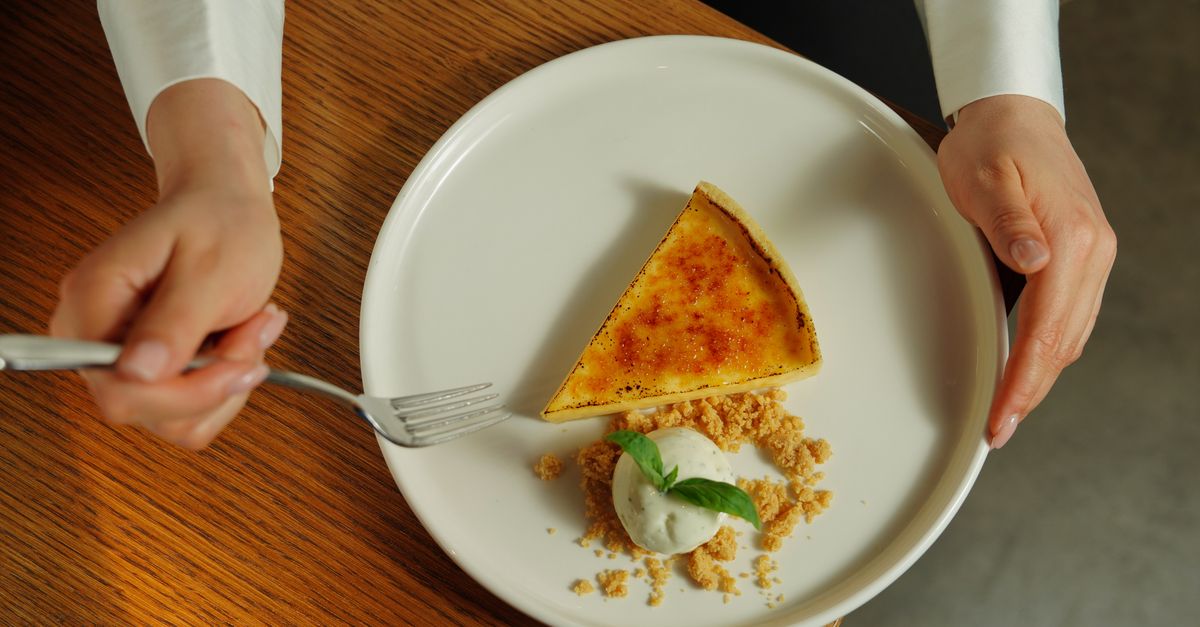
Dairy-intensive desserts carry some of the strongest margins on a restaurant menu. The food cost on a properly executed crème brûlée, panna cotta, or pot de crème is low relative to the price guests are willing to pay for something that reads as technically demanding and indulgent. The challenge is not the recipe. It is production at volume without sacrificing the quality that justifies the price.
Most of these desserts fail at scale for the same reasons. Inconsistent ratios across large batches. Dairy incorporated at the wrong temperature. Improper baking environments. Poor holding practices that compromise texture before service. Understanding the production variables that matter most in each preparation allows you to scale reliably and protect the margin these items should be delivering.
Crème Brûlée: The Temperature Problem
Crème brûlée lives or dies on custard texture, and custard texture is determined almost entirely by baking temperature and dairy ratio. The classic formula is heavy cream, egg yolks, and sugar. Heavy cream is non-negotiable here. The fat content stabilizes the emulsion during baking and creates the silky texture that defines the dessert. Substituting half and half or a cream blend produces a thinner, less stable custard that sets differently and holds poorly.
The ratio that produces consistent results at volume is approximately five yolks per quart of heavy cream, with sugar adjusted to your sweetness preference. This ratio creates a custard that sets firmly enough to hold the brûlée shell without being rubbery. Scaling up requires weight measurements, not volume, because the egg yolk ratio is the critical variable and volume measurements introduce inconsistency across large batches.
Bake in a water bath at 300 to 325 degrees Fahrenheit. The water bath moderates heat so the custard sets gently without the protein in the eggs coagulating too aggressively. Too hot and you get a grainy, curdled texture. Too cool and the custard does not set before the edges begin to overcook. Check doneness by gentle shake, not by internal temperature. The custard should wobble like set gelatin, with only the center moving slightly.
Batch production requires consistent ramekin size. Different ramekin depths change baking time, which means mixed batches bake inconsistently. Standardize your ramekin and your recipe, then batch based on that standard unit. Custards can be made up to two days in advance and held refrigerated without the brûlée shell. Apply sugar and torch just before service, not during prep.
Panna Cotta: Gelatin Ratio Is Everything
Panna cotta is one of the most forgiving desserts in pastry when the gelatin ratio is correct and one of the most problematic when it is not. Too much gelatin produces a rubbery texture that guests immediately identify as wrong. Too little and the panna cotta does not unmold cleanly or hold its shape through plating and service.
The standard ratio for clean unmolding is one teaspoon of powdered gelatin, or one and a half sheets of silver gelatin, per cup of dairy. For a whole milk and cream combination, a 50/50 blend creates balanced richness without heaviness. Using all heavy cream produces a richer, more indulgent result that holds shape slightly better but can feel heavy in warm weather service. Adjust dairy ratios seasonally if that distinction matters for your concept.
Bloom your gelatin fully before incorporating it into warm dairy. Blooming in cold liquid for five minutes before adding to cream that has been heated to 170 degrees but not boiled ensures complete dissolution without the grainy texture that results from improperly incorporated gelatin. Pour into molds or glasses immediately after combining, before the mixture begins to set. Refrigerate for a minimum of four hours, overnight is preferable for clean unmolding.
For service at volume, individual glasses or ramekins are more consistent than unmolded presentations. Unmolding introduces a step where temperature variations, mold condition, and technique all affect results. Serving in the vessel eliminates that variable and allows larger advance production without quality risk.
Pot de Crème: Batch Control
Pot de crème follows the same basic principles as crème brûlée but with higher dairy-to-egg ratios that produce a softer, more spoonable texture. The standard formula uses heavy cream and whole milk in combination with egg yolks and your flavoring base, typically chocolate or coffee. The dairy blend allows some control over richness. All cream produces an intensely rich result. A cream-to-milk ratio of two to one produces a lighter texture that works better when the dessert is rich in other components.
The key production discipline for pot de crème at volume is tempering. Heating the cream and dairy base to just below a simmer, then adding it to beaten yolks gradually while whisking, prevents the eggs from scrambling on contact with hot liquid. The tempered mixture then bakes in a water bath until just set, using the same doneness cues as crème brûlée.
For chocolate pot de crème, melt high-quality chocolate into the hot cream before tempering rather than adding it after. This produces more even distribution and deeper flavor. The chocolate also affects set time slightly, so test your batch timing before committing to service quantities.
Holding and Service
All three of these desserts benefit from full advance production. Crème brûlée and pot de crème can hold refrigerated for two days without quality loss. Panna cotta holds for three days. This advance production capacity is what makes them so valuable on a restaurant menu. The dessert course, often the most challenging from a labor standpoint, becomes manageable because all the actual work happens during prep rather than during service.
Keep desserts covered in the walk-in to prevent surface absorption of walk-in odors. Dairy-based desserts are particularly susceptible to picking up off flavors from strong-smelling neighbors. Dedicated covered storage or individually wrapped ramekins prevent this problem and maintain quality through the full hold period.
What This Means for Your Dessert Program
Dairy-intensive desserts like crème brûlée, panna cotta, and pot de crème are among the best-positioned items on any restaurant dessert menu. Strong margins, advance producibility, and guest perception of technical difficulty all work in your favor. The investment is in understanding the dairy variables that determine quality at scale, applying consistent ratios using weight measurements, controlling baking environments, and holding properly. Restaurants that get these details right produce desserts that are virtually identical from the first order to the last, service after service, which is what makes a dessert program genuinely profitable rather than occasionally impressive.