




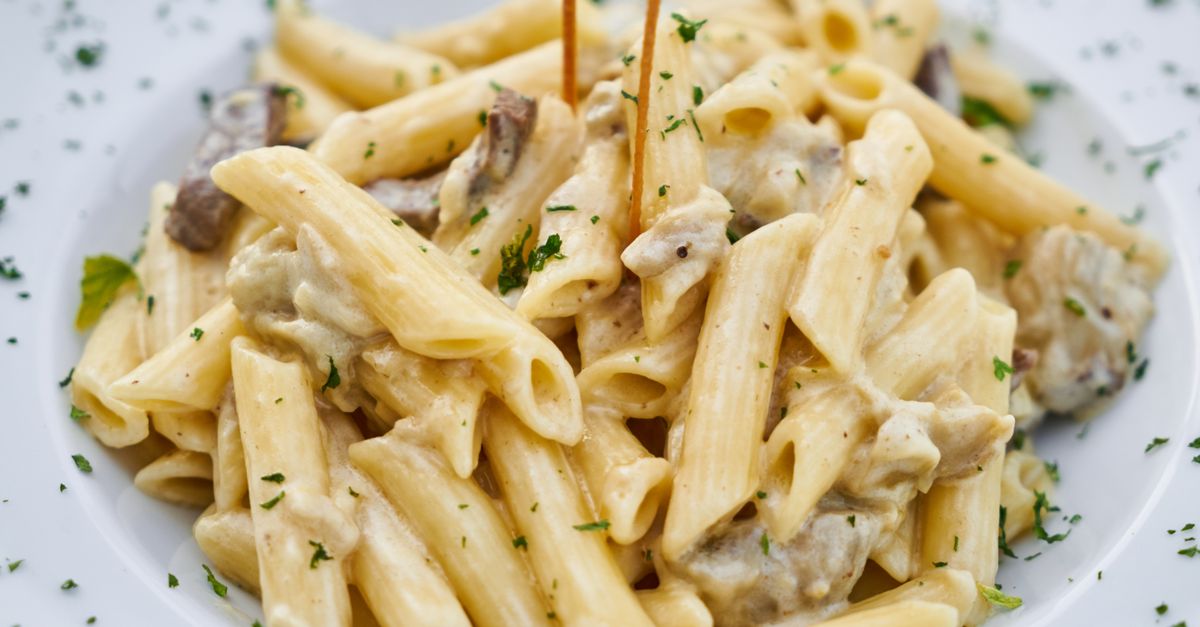
Béchamel is one of the five French mother sauces and the foundation of more restaurant dishes than most operators stop to count. Mac and cheese, lasagna, moussaka, cream-based gratins, mornay sauce, croquettes, and dozens of other preparations all start with béchamel. It is also one of the most frequently executed badly, producing results that are either gluey and stiff, thin and watery, or flat in flavor despite technically correct ratio adherence.
The most common source of béchamel inconsistency is treating dairy as interchangeable across different fat percentages. A béchamel made with whole milk and one made with 2% milk using the same roux ratio produces different textures, different flavors, and different holding characteristics through service. Understanding how fat percentage affects the sauce allows you to make consistent decisions about dairy choice and roux ratio that produce reliable results at scale.
What Fat Does in Béchamel
The fat in dairy contributes to béchamel in two ways. First, it carries flavor. The milk fat-soluble compounds that create the rich, clean dairy taste of a good béchamel are carried by the fat content. Lower fat milk produces a thinner flavor profile in the finished sauce even when the texture is correct.
Second, fat stabilizes the sauce through service. A béchamel made with whole milk forms a more stable emulsion than one made with skim or low-fat milk because the fat helps maintain the starch network structure that gives the sauce its body. Under heat and time in a steam table or bain marie, whole milk béchamel holds its texture more consistently than lower fat versions, which can separate or develop an unpleasant skin more quickly.
Roux Ratios Adjusted for Dairy Fat
The standard béchamel ratio of one ounce each of butter and flour per cup of milk is calibrated for whole milk. If you use 2% milk with this ratio, the sauce will be slightly thinner and less rich. If you use half and half, it will be noticeably thicker and richer. Adjusting the roux ratio to compensate for dairy fat percentage allows you to achieve a consistent target texture regardless of which dairy product you are using.
For whole milk at 3.25% fat, the standard ratio works. For 2% milk, increase the roux slightly, approximately 1.25 ounces of each per cup of milk, to compensate for the lower fat content and achieve comparable body. For half and half at 10 to 12% fat, reduce the roux to 0.75 ounces of each per cup to prevent the sauce from becoming too thick.
For heavy cream-based sauces that follow the béchamel structure, the roux can be reduced significantly or eliminated entirely because the fat content of the cream provides enough body without starch support. A cream sauce made with heavy cream and a small roux will behave differently from one made with no roux and reduced cream, and both are valid approaches depending on the application.
Whole Milk vs. 2% at Scale
In high-volume béchamel production, the difference between whole milk and 2% milk has real operational implications. A béchamel holding in a steam table through a four-hour service shows noticeably more stability when made with whole milk. The sauce maintains its texture longer, requires less frequent adjustment, and develops skin less aggressively.
The cost difference between whole and 2% milk is meaningful at high volume but should be weighed against the quality and consistency benefits. For applications where béchamel quality directly affects guest perception, mac and cheese as a featured menu item, lasagna in a fine dining context, or mornay sauce for a premium dish, whole milk is the correct dairy choice and the cost difference is justified. For institutional or high-volume applications where béchamel is a background component, 2% milk with adjusted roux is an acceptable cost-control measure.
Seasoning and Flavor at Different Fat Levels
Lower fat dairy requires more aggressive seasoning to achieve the same perceived flavor intensity as whole milk béchamel. This is because fat carries flavor compounds and amplifies the perception of seasoning. A béchamel made with 2% milk that tastes appropriately seasoned when the cook tastes it from the pot may taste flat when it reaches a guest in a finished dish alongside other components.
Season aggressively at the base level and taste at service temperature rather than cooking temperature. Nutmeg, white pepper, and salt are the classic seasonings for béchamel, and all three need to be present at levels that might feel like over-seasoning during production but deliver correct seasoning in the finished dish.
What This Means for Your Kitchen
Béchamel consistency at scale is a dairy selection and roux ratio problem before it is a technique problem. When you standardize your dairy choice, adjust your roux ratio to match, and season at the right level for the fat content you are using, béchamel becomes one of the most reliable and scalable sauces in your kitchen rather than one of the most variable. This reliability compounds through every dish that uses the sauce as a foundation.