




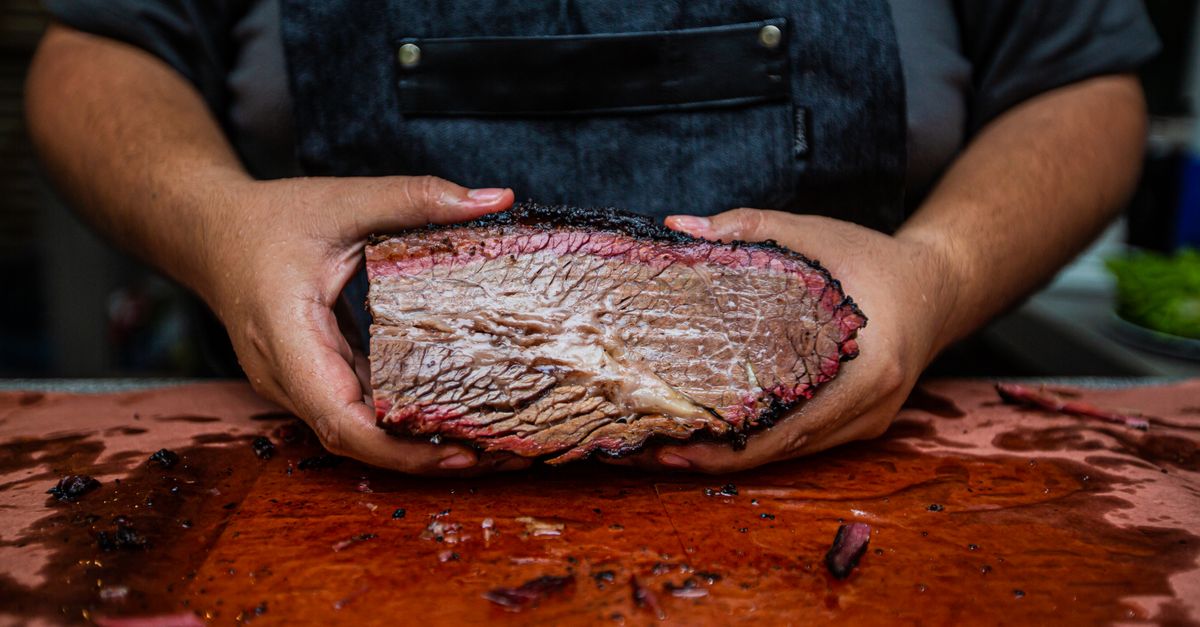
Dairy and Texas barbecue seem like an unlikely pairing until you consider what fat, smoke, and acid actually do to each other. Butter has been basting proteins over live fire for as long as there has been live fire. Cream turns smoked meat drippings into sauces that make most traditional barbecue sauces feel one-dimensional by comparison. And certain cheeses not only hold up to smoke but actively amplify it in ways that surprise guests who assumed cheese had no place at a barbecue table. The combinations that work are not attempts to soften barbecue. They are ways to extend and intensify what the smoker already produces.
Butter Basting: The Most Underused Finishing Tool
Basting with butter in the final stage of a long smoke does something nothing else replicates. The milk solids in butter brown against the surface of the protein, creating a new layer of Maillard reaction flavor on top of everything the smoke already built. The result is a surface with more depth and complexity than smoke alone produces, without softening the smoke character or competing with it.
The technique requires timing and temperature awareness. Apply butter in the final forty-five minutes to an hour of cooking or immediately before pulling protein from the smoker. At this stage, the surface is hot enough to brown the butter quickly without requiring extended additional cooking time. Melt butter in a pan, add aromatics if desired, and brush or mop generously across the surface. Let the butter set slightly before serving.
Compound butter elevates this further. A butter built with smoked salt, cracked black pepper, roasted garlic, and fresh herbs applied to brisket before it rests creates a surface layer that reads as intentional finishing rather than incidental fat. The herbs perfume the surface. The garlic deepens the savory character. The smoked salt reinforces the smoke without adding any additional cooking time.
Herb compound butter on smoked chicken thighs, bone marrow butter on beef ribs, and jalapeño honey butter on pork shoulder each create distinct finishing profiles from the same base technique. Once your kitchen has a compound butter program established, applying it to smoked proteins requires almost no additional labor.
Cream Sauces Built on Smoked Drippings
The drippings that collect beneath smoked proteins are among the most flavorful liquids any kitchen produces. They carry concentrated beef or pork fat, smoke compounds, rendered collagen, and the accumulated seasoning from hours of cooking. Most of this liquid gets discarded. The restaurants that do not discard it build sauces that cannot be replicated by any other method.
The technique is straightforward. Collect drippings from daily production and refrigerate. The fat rises and solidifies, making it easy to remove. The concentrated liquid beneath is your sauce base. Warm it, reduce by half if needed, add heavy cream, and reduce again until the sauce coats a spoon. Finish with butter and fresh herbs. The result needs almost no additional seasoning because the smoke, salt, and rendered fat already did that work.
These cream sauces pair naturally with proteins and preparations that typically live far from the barbecue table. Smoked brisket dripping cream sauce over fresh pasta creates a crossover application that works at price points impossible to justify with traditional barbecue service. The same sauce enriches polenta, poaches eggs for brunch service, or finishes roasted vegetables with a complexity that no other kitchen preparation produces as efficiently.
At service scale, reduce collected drippings into a concentrated base and portion into small containers. One to two tablespoons of concentrated base per individual sauce portion keeps production practical even in high-volume settings.
Cheese That Holds Up to Smoke
Most cheeses dissolve into the background next to heavily smoked meat. The ones that hold their own share certain characteristics: high fat content, sufficient aging to develop flavor that competes, or distinctive tang that cuts through rendered fat.
Sharp white cheddar is the most reliable pairing for smoked pulled pork and smoked sausage. The flavor is assertive enough to register alongside smoke without being so strong that it competes. It melts cleanly and integrates well when warm, making it useful across sandwiches, loaded applications, and plated dishes.
Queso fresco crumbled over smoked chicken or smoked fish tacos contributes fresh, milky acidity and a crumble texture that contrasts the soft, smoky protein in ways that melted cheese cannot. It does not melt under service heat, which is precisely its value in this context. The texture stays distinct.
Smoked gouda deserves particular attention because it occupies unique territory: the cheese itself carries smoke flavor that compounds with the protein rather than competing. This is the rare case where a smoked ingredient makes another smoked ingredient more interesting rather than redundant. Use it in applications where you want the cheese flavor to read as part of the barbecue experience rather than separate from it.
Buttermilk in Barbecue Context
Buttermilk marinades on proteins destined for the smoker produce a different result than acid-based marinades or dry brine approaches. The lactic acid in buttermilk works slowly and penetrates deeply, relaxing muscle fiber proteins in a way that creates noticeably more tender texture after extended cooking.
Smoked chicken brined in buttermilk for twelve to twenty-four hours stays consistently juicier through the long cook than chicken that went in dry or brine-only. The proteins have been partially relaxed before heat applies, which means they hold moisture more effectively under the extended temperature exposure of smoking.
Buttermilk slaw alongside smoked proteins creates acidity that cuts rendered fat with a gentler touch than straight vinegar. The lactic acid in buttermilk is less sharp than acetic acid, which makes it a better complement to heavily smoked meats where the smoke itself already contributes bitter and acidic compounds.
Buttermilk biscuits are currency in Texas restaurant culture. Made correctly, they require nothing more than proper cold butter worked into flour, buttermilk added cold, minimal mixing, and adequate heat. The fat in the buttermilk tenderizes the dough. The acid activates the leavening. Nothing alongside smoked brisket reads as more complete.
Crossover Applications That Capture New Menu Territory
The most interesting opportunity in combining dairy and barbecue is the crossover application that belongs fully to neither category. Cream-enriched mac and cheese as a barbecue side made with smoked meat drippings in the cheese sauce. Smoked meat and cheese boards that place sliced brisket alongside aged cheddar, local honey, and pickled vegetables. Compound butter served with smoked proteins at the table rather than applied only in the kitchen.
These applications reach guests who want the flavors of barbecue without the format constraints of traditional service. They extend your smoked product into menu territory that commands different price points and captures different occasions. And they position your kitchen as one that thinks about what its smoker produces as a versatile ingredient rather than a single-format offering.
What This Means for Your Kitchen
Dairy and barbecue are not opposites. They are complements that most Texas kitchens have not fully explored. Butter basting extends the flavor work your smoker already does. Cream sauces built on drippings create something that cannot come from any other process. Cheese selections chosen for their ability to hold up to smoke add dimension rather than distraction.
The foundation for all of this is already in your operation. Your smoker produces drippings daily. Your walk-in holds butter, cream, and cheese. The technique barrier is low. The menu differentiation is meaningful.