




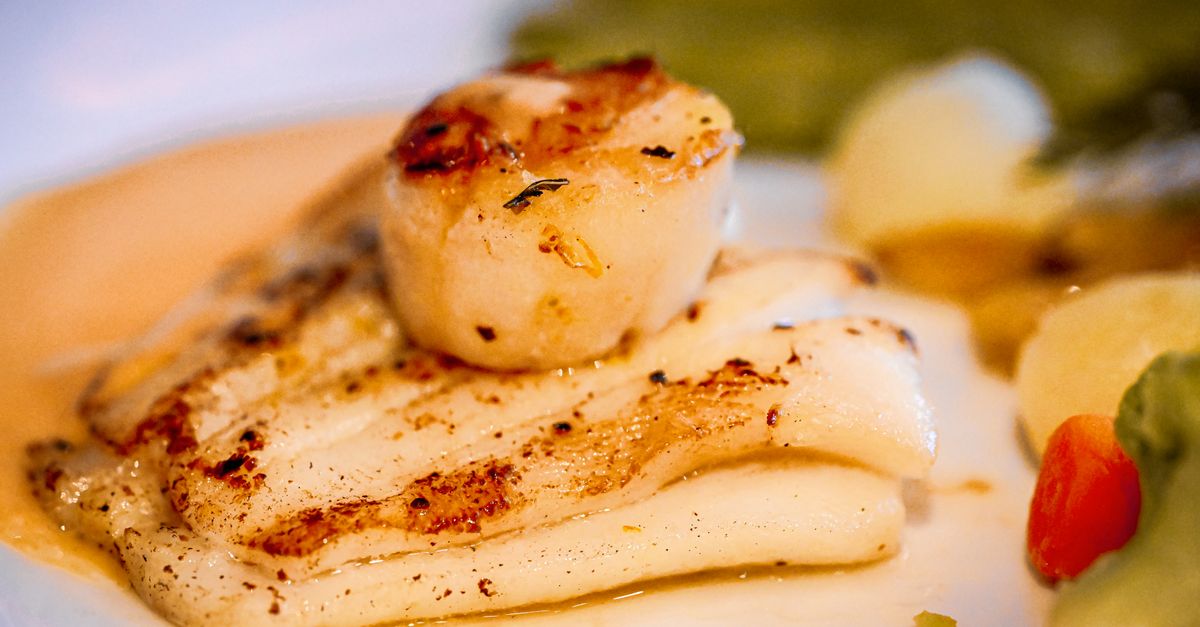
Butter poaching produces results that are genuinely difficult to achieve through any other cooking method. Proteins cooked in beurre monté develop a texture that is simultaneously tender, silky, and deeply flavored in ways that searing, roasting, and steaming cannot replicate individually. Despite delivering exceptional results across a range of proteins, the technique remains underused in most restaurant kitchens, dismissed as too labor-intensive or too technique-dependent for real-world volume. Both concerns are overstated. Butter poaching is methodical, forgiving, and extraordinarily effective once the mechanics are understood.
Understanding Beurre Monté
Beurre monté is the cooking medium for butter poaching. It is a stable emulsion of butter and water maintained at a precise temperature that keeps fat and water suspended together rather than separated. This emulsion is what makes gentle, even protein cooking possible.
Making beurre monté: bring two tablespoons of water to a simmer in a heavy-bottomed pan. Begin whisking in cold butter cut into small pieces, maintaining the heat between 160 and 190 degrees Fahrenheit. Continue adding butter until you have the volume needed for your production batch. The emulsion holds when temperature stays within this range.
Below 160 degrees Fahrenheit, the emulsion loses stability and fat begins to separate from water. Above 190 degrees Fahrenheit, the butter breaks and clarifies, becoming conventional drawn butter rather than an emulsion. The cooking window is the range between these two points. A probe thermometer in the beurre monté is not optional equipment for this technique. It is how you know the method is working.
What Butter Poaching Does to Proteins
At 160 to 180 degrees Fahrenheit, proteins cook gently rather than aggressively. Muscle fibers tighten minimally. Collagen converts to gelatin at a controlled rate. Moisture stays in the protein rather than being driven out by high heat. The fat in the cooking medium simultaneously coats the exterior of the protein throughout the cooking process, creating internal basting that no other method produces in quite the same way.
Lobster poached in beurre monté at 165 degrees Fahrenheit produces meat with a texture that is firm enough to have structure and tender enough to feel almost custardy. The same lobster boiled or steamed at higher temperatures produces a noticeably firmer, drier result because the aggressive heat drives moisture out faster than gentle poaching does. The technique does not change the flavor of lobster. It changes the texture in a way that makes the flavor more accessible.
Chicken breast cooked in beurre monté at 160 degrees Fahrenheit eliminates the dryness problem that makes chicken breast a challenging protein in every other cooking context. The gentle heat and fat environment maintain moisture throughout the cook. The result is chicken breast that guests notice as different even when they cannot identify why.
Proteins That Benefit Most
Lobster is the canonical application for good reason. The texture transformation from butter poaching is more dramatic with lobster than with almost any other protein, and the result directly justifies the premium pricing the technique supports. Lobster tails poach in eight to twelve minutes in beurre monté held at 165 degrees Fahrenheit.
Large sea scallops respond exceptionally well. The even, gentle heat eliminates the overcooked ring around the exterior that appears with pan-seared scallops even when the center is cooked perfectly. The entire scallop develops the same texture throughout. A brief sear in a very hot pan after poaching creates a caramelized surface while the interior remains exactly as the poaching established it.
High-fat fish such as salmon, halibut, and sea bass benefit significantly. The fat in the fish combines with the cooking fat throughout the process, creating richness that distributes evenly rather than concentrating at the surface. Salmon poached in beurre monté and finished briefly under a broiler serves the visual appeal of a seared preparation with the internal texture of a far more controlled cooking method.
Chicken breast may be the most compelling argument for developing this technique in a high-volume kitchen. It solves the most persistent quality challenge with the most widely ordered protein category without requiring extraordinary skill or exotic ingredients. If your kitchen serves chicken breast regularly and struggles with consistent texture, butter poaching deserves a serious trial.
Production at Restaurant Volume
Butter poaching scales through batch production in a way that makes it practical even at volume. Set up a hotel pan of beurre monté over a steam table or induction unit. Maintain temperature with a probe thermometer. Poach multiple portions simultaneously. Six lobster tails require the same active attention as one when they all go in at the same temperature and come out together.
The cooking medium itself has significant value after proteins are poached in it. Beurre monté used to poach lobster carries shellfish flavor that transfers into the fat. Strain it through a fine-mesh strainer, hold warm, and use it as a sauce, a finishing fat for pasta, or a warm drizzle over the plated protein. The cooking medium becomes the sauce with no additional preparation.
Proteins can be held in beurre monté at the lower end of the temperature range for extended periods during service without quality loss. This makes butter poaching one of the most effective holding methods available for delicate proteins. Scallops held in beurre monté at 155 degrees Fahrenheit for twenty minutes emerge in better condition than scallops held in any other service environment.
Service Execution
Butter-poached proteins typically benefit from a finishing step that creates visual appeal and textural contrast. A brief sear in a very hot pan or thirty seconds under a broiler on the presentation surface creates color and a slightly crisp exterior while leaving the interior texture established by poaching completely intact.
This two-step approach, poach then sear, gives complete control over internal texture and external presentation simultaneously. Interior temperature and texture are locked in by the poaching process. The sear happens fast enough that it does not alter the interior while creating the caramelization that makes the dish visually compelling.
Spoon warm cooking butter from the beurre monté over the protein as it leaves the pan. Finish with fresh herbs, citrus zest, or a small amount of cream added to the strained cooking butter. The sauce requires no additional preparation because it was built during the cooking process. The protein and the sauce come from the same pan.
Food Cost and Pricing Considerations
Butter poaching uses significant butter volume. A production batch of beurre monté requires several pounds of butter to maintain the volume necessary for submersion cooking. This cost must be factored into the pricing of any dish using the technique.
The economics work through premium pricing on appropriate proteins. A butter-poached lobster tail, scallop, or sea bass at a price point that reflects both the ingredient and the technique generates contribution margin that absorbs the butter cost. Applying butter poaching to commodity proteins at standard pricing creates cost pressure without sufficient return.
The cooking fat can be strained and used for one or two additional batches after filtering out protein residue and any compromised particles. This extends the economics meaningfully when butter poaching is part of regular production rather than an occasional special.
What This Means for Your Kitchen
Butter poaching is not a trend or a showpiece technique. It is a method that produces genuinely superior results with specific proteins, and it is accessible to any kitchen with temperature control capability and quality butter. The investment is in understanding the mechanics and setting up the production system. Once established, the technique is one of the most reliable ways to differentiate the texture quality of your best proteins from what competitors are doing.
Starting with one protein, lobster or salmon are the most compelling entry points for most Texas restaurant menus, gives your team a focused context in which to develop the technique before expanding it. The textural result is something guests notice and remember even when they cannot name the method that produced it.