




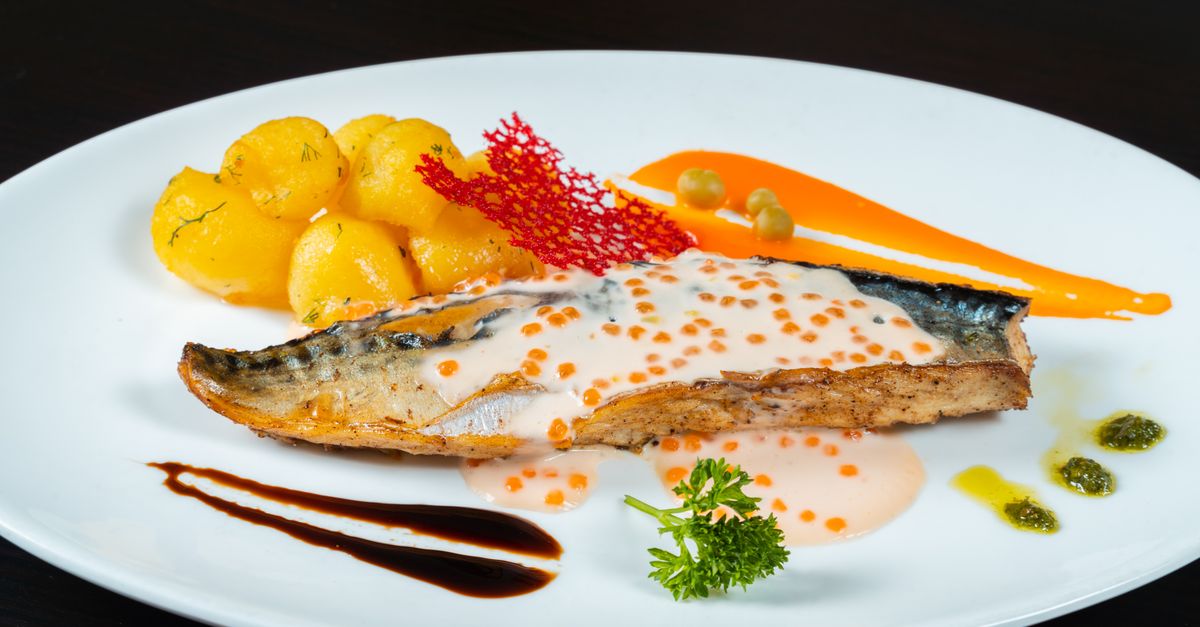
Beurre blanc has a reputation for being fragile, finicky, and unsuitable for high-volume restaurant service. Some of that reputation is deserved. The sauce is genuinely sensitive to temperature, requires proper technique, and does not forgive carelessness the way a roux-based sauce does. But the reputation for being impractical at volume is largely a training and systems failure, not an inherent property of the sauce.
Restaurants that have cracked the beurre blanc code at volume have done it by building reliable base preparation methods, controlling the temperature environment the sauce lives in during service, and training line cooks on exactly two or three interventions that save a sauce in distress. None of this requires exceptional skill. It requires a clear system and consistent execution.
Understanding Why Beurre Blanc Breaks
Beurre blanc is an emulsified butter sauce built on a wine and vinegar reduction. The butter is whisked in cold, piece by piece, over low heat, creating an emulsion where tiny fat droplets are suspended in the acidic, flavorful base. This emulsion is maintained by the temperature staying within a narrow band, roughly 160 to 180 degrees Fahrenheit, and by the physical structure of the sauce maintaining the fat droplets in suspension.
The sauce breaks when temperature goes outside this range. Too hot and the fat separates completely from the liquid, producing a greasy, broken sauce that cannot be rescued by whisking. Too cool and the butter begins to solidify, creating a grainy texture that also cannot be fixed by technique at that point. Understanding this temperature dependency is the key to managing beurre blanc at volume.
Cream is the practical solution to this temperature sensitivity. Adding a small amount of heavy cream to the wine-vinegar reduction before incorporating butter creates a more stable emulsion base that holds over a wider temperature range. Two tablespoons of heavy cream per cup of reduction does not significantly change the flavor of the finished sauce but dramatically improves its stability through service. This is not a compromise. It is standard professional technique.
Building the Base in Advance
The wine and vinegar reduction, shallots, white wine, white wine vinegar or champagne vinegar, reduced until nearly dry, is the most labor-intensive part of beurre blanc preparation and can be done entirely in advance. Prepare your reduction during prep, strain out the shallots, and hold it refrigerated until service. At service, warm the reduction with your heavy cream, then mount with cold butter as orders come in.
This prep approach means that during service the cook is only doing the butter mounting, which takes approximately three minutes per batch. The complex flavor development has already happened in advance. The service-side execution is simple enough that it can be managed consistently even on a busy line.
Holding During Service
The holding environment for beurre blanc during service is where most volume attempts fail. The sauce cannot sit over direct heat, even on the lowest setting, without eventually breaking. It cannot be left in a bain marie that is too hot. The correct holding environment is a warm spot, genuinely warm rather than hot, where the sauce stays between 150 and 165 degrees.
A practical solution is a small bain marie set to 140 to 145 degrees Fahrenheit, which keeps the sauce warm enough to plate but below the temperature where breaking becomes likely. Check the temperature of the water bath regularly because most bain marie setups run hotter than their settings suggest.
Make beurre blanc in small batches during service rather than one large batch at the start. A small batch made every thirty to forty minutes is fresher, more stable, and easier to manage than a large batch that has been sitting for two hours. The three-minute production time per batch makes this practical even during busy service.
Rescuing a Broken Sauce
Every cook working beurre blanc on a restaurant line will eventually encounter a broken sauce. Training your team on the rescue technique prevents the broken sauce from becoming a lost order.
If the sauce has separated but not yet gone grainy, remove it from heat immediately. Whisk vigorously while adding a tablespoon of cold water or cold cream. The cold liquid and the mechanical action of whisking can re-emulsify the sauce if caught early. This works approximately 70% of the time when the sauce has just begun to break.
If the sauce is fully separated and greasy, discard it and make a fresh batch from your pre-made reduction. Attempting to rescue a fully broken beurre blanc wastes more time than starting over. With a pre-made reduction base, a fresh batch takes three minutes. The lost batch is a small cost relative to the time saved by not attempting a futile rescue.
What This Means for Your Line
Beurre blanc at volume is a solvable problem. Pre-made reduction base, cream stabilization, small batch production during service, proper temperature holding, and trained rescue technique cover the complete system. Kitchens that put this system in place and train their line cooks on it consistently execute beurre blanc through full services without the drama that the sauce’s reputation suggests.
The sauce is worth the system investment. Beurre blanc delivers clean, bright, rich flavor that signals culinary competence and elevates proteins in a way that few other quick-preparation sauces can match. Getting it right at volume unlocks a menu tool that raises the quality perception of everything it accompanies.