




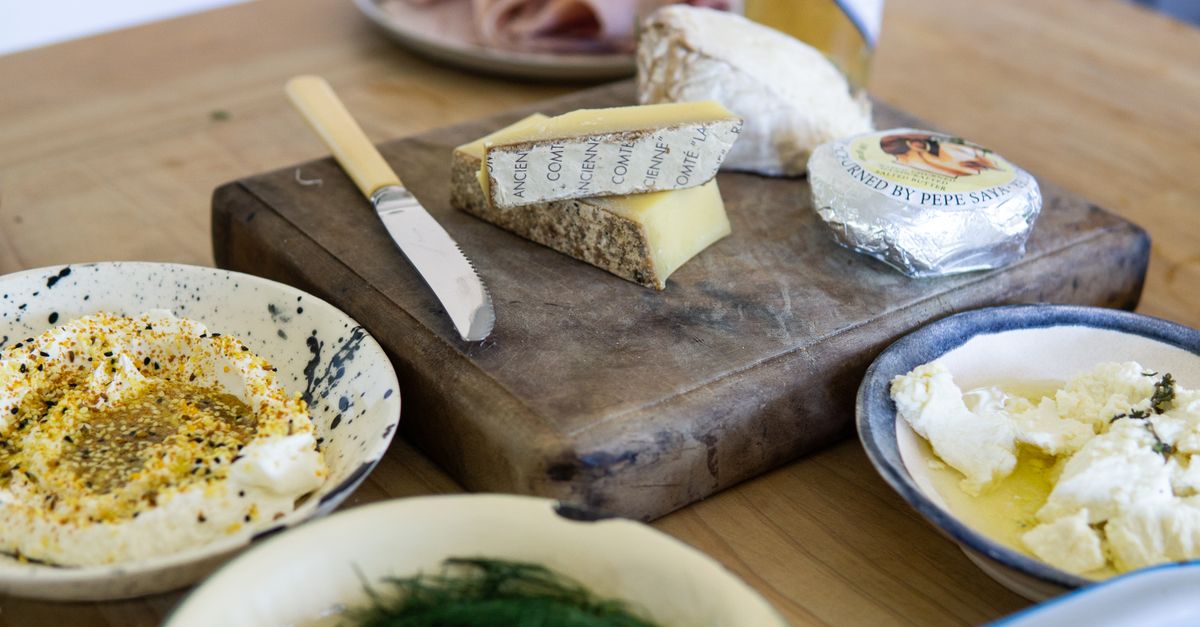
Texas restaurants have exceptional command of queso. Most have stopped there. The broader category of dairy-forward dips and shareable spreads extends well beyond melted cheese into territory that is more seasonal, more versatile, and often more interesting for guests who already know your queso and order it without thinking. These preparations require minimal additional equipment, use dairy products already in your walk-in, and occupy a price point that delivers strong contribution margins while giving the table an experience worth sharing.
Whipped Feta: The Most Versatile Base in the Category
Whipped feta has moved from trend to standard practice in quality-focused casual dining over the past two years. The technique is accessible: blend feta with cream cheese or Greek yogurt, add olive oil and lemon juice, process until completely smooth. The result is a creamy, salty, pleasantly tangy spread that works in multiple contexts and adapts readily to seasonal variation.
A reliable base ratio: eight ounces of feta, four ounces of cream cheese, two tablespoons of olive oil, one tablespoon of lemon juice, and black pepper to taste. Process until smooth, adjust seasoning, and the base is complete. From this foundation, the applications multiply through finishing rather than through reformulation.
Top with harissa oil and toasted sesame for a preparation that reads as Middle Eastern in influence. Add roasted garlic and fresh herbs for a more broadly Mediterranean profile. Drizzle with honey and crushed walnuts for a version that moves between savory and sweet in a way that pairs naturally with wine. Top with warm spiced chickpeas for something more substantial that can function as a light meal. The base stays the same. The finishing drives the positioning.
Serve warm with house-made pita or flatbread. Price at twelve to sixteen dollars depending on your market and accompaniments. Food cost on a well-executed whipped feta board sits well below twenty-five percent, and the perceived value from presentation and accompaniment quality positions it firmly as a premium starter.
Seasonal Ricotta Spreads
Fresh ricotta as a spread base allows for more seasonal variation than almost any other dairy preparation because the cheese itself is mild enough to carry virtually any flavor without interference. The base preparation is simple: whip whole-milk ricotta with a small amount of heavy cream until smooth and airy, season with olive oil and salt, and the canvas is ready.
Summer: roasted cherry tomatoes slow-cooked until concentrated and jammy, placed on whipped ricotta with torn basil and flaky sea salt. The tomatoes can be prepared in large batches during prep, held refrigerated for three days, and plated in under a minute. Fall: whipped ricotta with fig preserves, candied walnuts, and a drizzle of aged balsamic. The combination of sweet, creamy, crunchy, and tangy creates exactly the kind of contrast that makes a starter memorable.
Winter ricotta boards build on warming spices and richer accompaniments. Honey with black truffle or smoked salt. Roasted pears with toasted almonds. Pomegranate seeds and pistachio. Each variation requires almost no additional cost over the base preparation and creates a genuinely different experience across visits.
Ricotta spreads photograph exceptionally well because of the contrast between the white, airy base and colorful, textural toppings. Social sharing is a natural outcome. Position these as seasonal specials with the specific topping called out in the description to create urgency and give servers something specific to pitch.
Warm Cream Cheese Dips
Warm cream cheese dips have broad appeal across concept types when built with care. The failure mode of this category is the institutional version made from frozen ingredients with minimal seasoning. The version worth ordering is built from fresh components with enough technique applied that the result is clearly different from what guests expect.
Jalapeño cream cheese dip built correctly uses roasted and diced fresh jalapeños rather than canned, cream cheese blended to achieve a dippable consistency rather than straight from the container, and enough shredded Monterey Jack added for additional stretch and meltability. Bake at 375 degrees Fahrenheit until golden on top and bubbling throughout. Serve immediately with warm flour tortillas or house-made chips. This version occupies Tex-Mex positioning without competing directly with queso.
Spinach and cream cheese made with properly handled fresh spinach, squeezed very dry before incorporation, seasoned aggressively, and finished with parmesan and roasted garlic delivers something fundamentally different from the institutional version that most guests know. The execution distance from the expected is what makes it worth ordering and reordering. The technique difference is the selling point.
Cultured Dairy Options: Labneh and Crème Fraîche
Labneh, strained yogurt, is one of the most underused dairy products in Texas restaurants despite being exceptionally well suited to the shareable starter format. Thicker than Greek yogurt, more spreadable than cream cheese, with a naturally pleasant tang that adds dimension without asserting itself.
Making labneh in-house requires only full-fat yogurt, cheesecloth, and twenty-four hours of passive straining. The result costs a fraction of specialty cultured cream cheeses and produces a spread with more interesting character than cream cheese at a lower ingredient cost. Season with za’atar and olive oil for a traditional approach. Add roasted garlic and lemon for a version that bridges familiar and adventurous. Drizzle warm honey over a plain labneh spread and the dairy itself reads as a complete preparation.
Crème fraîche-based dips work particularly well with crudités and raw vegetables because the cultured tang cuts through raw vegetable flavor in a way that cream cheese does not. A preparation built with crème fraîche, fresh herbs, shallot, and lemon juice positions as an elevated alternative to ranch dressing anywhere that ranch currently appears as a dipping component. The cultured base connects to beverage pairing more naturally than cream cheese, which makes it easier for servers to suggest wine alongside.
Pricing, Portioning, and Service Considerations
Dairy dips and spreads occupy an ideal position in the starter lineup: high perceived value, favorable food cost, fast execution, strong visual presentation, and natural social sharing behavior. The challenge is portioning and accompaniment discipline that protects margin.
Use portion controls for the dairy base. An extra tablespoon of ricotta or cream cheese per portion seems minor in isolation. Across fifty covers, it adds up meaningfully. Use a portioning scoop or weight for the base and plate accompaniments with the same discipline applied to other high-cost ingredients.
Accompaniments significantly affect perceived value and help justify premium pricing. House-made flatbread, seasonal crudités, quality crackers, and house-made chips all elevate the presentation and make the plate feel complete rather than sparse. They also extend the dairy component across more bites, which improves the value experience for the guest while keeping the per-portion dairy cost controlled.
Position dairy dips explicitly as shareable items designed for the table. Train servers to describe them in these terms. Framing shifts the occasion from individual starter to group experience, which drives orders across table sizes rather than limiting them to solo diners or couples.
What This Means for Your Menu
Dairy dips and spreads are among the most accessible, highest-return additions to any starter menu. The technique requirements are modest. The ingredient costs favor strong margins. The visual appeal supports premium positioning and social sharing. And the category gives you seasonal variation capability that queso alone cannot provide.
Starting with one or two well-executed options before expanding the category keeps execution focused. A perfect whipped feta and a seasonal ricotta spread that rotates with available ingredients will outperform six mediocre options every time. Once consistency is established and the sales pattern demonstrates demand, expanding the category adds incremental revenue from an already proven position.